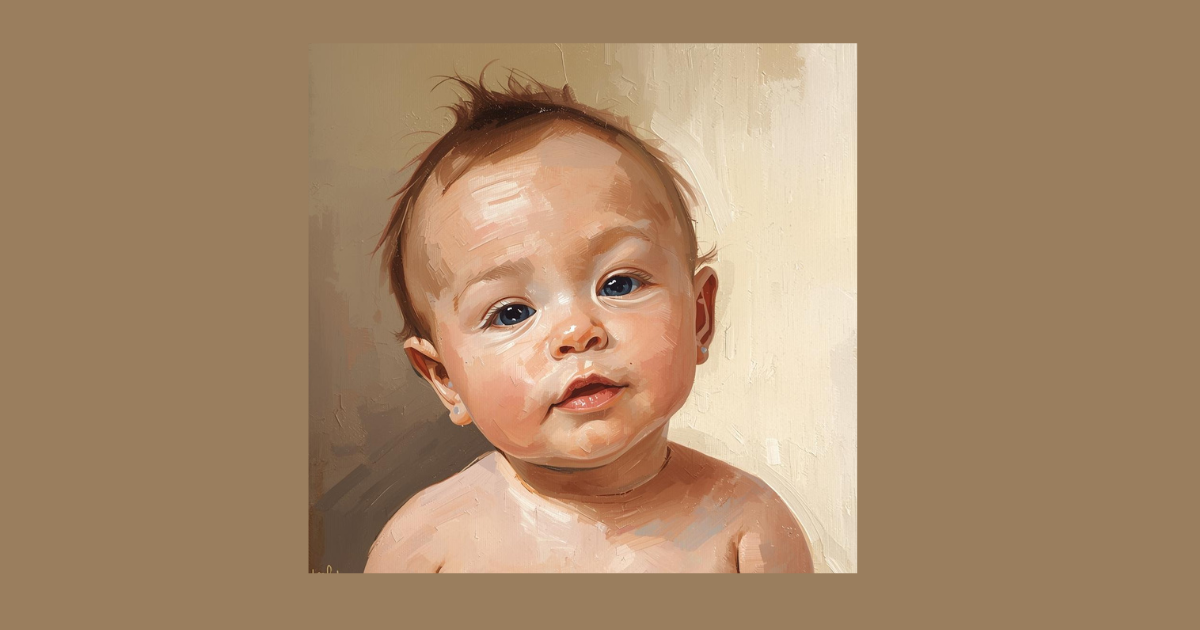
One of the most common questions parents bring in the first months sounds something like this: „Why does my baby keep tilting his head to one side? Is it just a habit?“
Although at first it sounds very worrying, the good news is that in many cases torticollis can be recognized, monitored and significantly alleviated in time with appropriate support. It is a condition worth taking seriously – but not panic.
As someone who has been working with babies and their parents for years, and who has chosen torticollis as the subject of a master's thesis, I very often see the same pattern: parents feelings that something is wrong long before someone officially says the diagnosis. And sometimes the same parents and osteopath „hit sridu“, while some doctors rush to explain type ‘, it's just habit’, or the diagnosis is made in a way that instills more fear than understanding in the parents.
What is torticollis in babies (crooked neck)?
Torticollis means that the neck is in an irregular position and the head is tilted to one side, while the chin faces the opposite side. In everyday speech, you will often hear the expression „crooked neck“.
One important muscle on the neck is most often affected – sternocleidomastoid
There are two main groups of torticollis:
- Congenital (congenital) torticollis
is observed in the first weeks or months of life. It is often associated with the position of the baby in the womb, limited space, long-term or very fast delivery, vacuum or forceps delivery, and muscle and soft tissue load during delivery itself. - Acquired torticollis
develops later, eg after infection, injury, inflammation, certain neurological conditions or spine problems, and always requires more detailed medical treatment.
It is important to emphasize: torticollis is not a habit and it is not the fault of the parents. It is a combination of position, mechanical forces and individual sensitivity of the tissue, to which the baby's body responds in its own, often very wise-compensatory way.
If we compare that description with what is called in the literature KISS‑sindrome (Kopfgelenk‑induzierte Symmetrie‑Störung), from the outside we often see a very similar picture: a baby tilting its head, preferring one side and twisting its body into a slight „C“. Code classic torticollis in the foreground is the muscle itself (most often sternocleidomastoid) – it is shortened, tense or thickened and pulls the head to a certain position. Code KISS‑sindrome the starting point is different: the primary problem is seen in the small joints between the occipital bone, atlas and axis (OAA), and muscle tension and postural asymmetry are a consequence of this, not a cause.
In Croatian practice, the term KISS‑sindrom is used less often than in the German-speaking world, but it also exists in the professional literature among physiotherapists and osteopaths who deal with early motor development. In some children, what at first glance looks like „only postural asymmetry“ is actually a consequence of an imbalance in the OAA – area when the balance is restored there, the body often spontaneously finds a more symmetrical position.
How to recognize torticollis in infants?
In practice, it often happens that parents are not the ones who diagnose „“, but they are almost always the first to they notice that something is not right. It is not a dramatic moment, but a series of small, recurring situations throughout the day.
The most common signs in everyday life:
- The baby almost always tilts his head to the same side – in the waking state, in the wheelchair, in the car seat, in his arms.
- It seems as if the baby is constantly looking at the same part of the room – has „favorite kut“ or „favorite side“.
- When you try to stimulate your gaze towards the opposite side with a game, toy or voice, the baby has a harder time turning or quickly gives up.
- When breastfeeding or bottle-feeding, it eats much easier on one side, while on the other it protests, twists or rejects the breast.
- In the prone position (tummy time), the baby is reluctant to raise its head, hold it asymmetrically or look visibly nervous.
What else can you notice:
- It can develop over time mild asymmetry of the head
the back of the skull is flattened more on one side (plagicephaly), the ear may look like – ran away„forward, the face slightly oblique. - Sometimes in the neck area you can feel an elastic, movable „lump“ in the muscle itself – it is most often a local thickening of the muscles, which in itself does not have to be dangerous, but it is a clear sign that an examination is needed.
Important difference: each baby has its own „favorite side“, but in torticollis babies he cannot turn his head equally freely on both sides, not even when she's calm, full and relaxed..
Why does torticollis occur in babies?
Code congenital torticollis the cause is most often a combination of position in the uterus, the action of forces during childbirth and the reaction of muscles and soft tissues to these loads.
Possible factors:
- long-term or extremely fast birth
- birth with the help of vacuum or forceps
- limited space in the uterus (multiple pregnancy, certain positions of the baby)
- mild injury, strain or lack of oxygen (ischemia) in the neck muscle during childbirth.
Code acquired torticollis causes can be:
- infections in the neck or ear area
- muscle inflammation, injury, trauma
- certain neurological conditions or spinal problems.
The baby's body does what is most logical for him: he looks for the position in which it is least uncomfortable or painful. From the outside it looks like „crooked vrat“, from the inside it actually is survival and discomfort reduction strategy.
When should you react and seek help?
The rule applies to torticollis: better earlier than later. The earlier we recognize and support the baby, the less likely it is to have stronger asymmetries of the head, body and later motor development.
It is good to seek help if:
- for several weeks now, you notice that the baby is almost always looking to one side
- the child has a harder time turning his head to one side, even when he is calm and relaxed
- breastfeeding or feeding is persistently much more difficult on one side
- you notice the development of asymmetry of the head (flattened back on one side)
- you have the feeling that the baby's whole body is „in luku“, more pulled to one side.
Official the diagnosis of torticollis is made by a pediatrician and he can refer the child to:
- further processing (ultrasound, neurological examination, possibly orthopedic processing)
- physical therapy or rehabilitation team
- development monitoring with advice for home exercises.
At the same time, I can say from experience that there is another side to the coin:
- part of the doctor torticollis very quickly „labels“, without taking into account the whole body of the baby, the dynamics of pregnancy and childbirth
- the second part, on the contrary, reduces parental concern with sentences of type „, it's just a habit“ or „will pass by itself“.
Because of this, parents and an osteopath (or other specialist in early motor development) are often the first to they indicate that something needs to be looked at in more detail
What can parents do at home?
With professional guidance from a pediatrician and a team that can include a physiotherapist and an osteopath, parents play a crucial role in everyday, small, gentle interventions. Not because they need to become therapists, but because home is where the baby spends most of the day, and the combination of medical assessment, manual therapy (including osteopathy) and parental support usually gives the best result.
Examples:
- Feeding positions
adjust the baby in positions where it is easier to turn the head towards the – heavier„side, but without forcing. If the baby starts crying and is very opposed, it is a sign that he needs to stop and adapt. - Play on the floor
time on the back, side and stomach, with stimulation of gaze and movement towards the – unloved„side. Instead of pushing your head with your hand, it is better to „call the child with a toy, voice, touch. -
Environment
put interesting objects, light or your face in the direction that is heavier. The goal is for the baby wishturn around, not that „mora“.
All these interventions should be:
- gentle and short
- repeated several times throughout the day
- aligned with the rhythm of the baby (not in a moment of great fatigue or hunger).
The goal is not to „correct“ baby, but to give her the opportunity to it reveals new, more comfortable and symmetrical positions.
What is the role of osteopathy in torticollis?
In his field of work, an osteopath can recognize the clinical picture that corresponds to torticollis or KISS‑sindrome and communicate this clearly to the parents and refer them to the pediatrician, but the official medical diagnosis always remains the responsibility of the doctor, where of course it is important that, if the parents first come to the osteopath and the problem is noticed there, the child is referred to the appropriate doctor in a timely manner.
What does an osteopath watch and do?
- Assessment of muscle, fascia and joint tension not only in the neck, but also in the shoulder girdle, skull, spine, pelvis and hips. Torticollis rarely exists „by itself“ – is often accompanied by asymmetries elsewhere in the body.
- Very gentle, customized techniques which affects tissue relaxation, better mobility and comfort in the body. In babies, these are never „aggressive“ movements, but micro-movements, supporting and guiding tissue.
- Monitoring how the baby uses his body
as it turns, as it reaches with its arms, as it rests in a lying and prone position.
Osteopath can parents:
- show different ways of wearing,
- help them find positions where it is easier for the baby to turn to the hard side,
- explain how to organize the play space so that it promotes symmetry.
It is important to always emphasize:
- osteopathy no „cures“ torticollis for itself, rather, it is included as one of the supports along with pediatric and physiotherapy care
- treatments should be gentle, safe and transparent
parents have the right to ask what is being done and why at all times
Why torticollis is more than a diagnosis to me (and maybe to you)
For me, as the person who chose torticollis in babies as the subject of a master's thesis and as an osteopath working in the field, torticollis is much more than a clinical label. It is the story of a body that has adapted
I often see the following scenario in the clinic:
- parents have been saying for months that something „doesn't seem right to them
- one doctor says that „is normal“ and will pass, another writes the diagnosis faster and better without explanation
- only when someone who has time to observe the whole body (physiotherapist, osteopath, developmental therapist) is involved does the picture become clear.
That is why it is important for me to emphasize:
- yes, it is the pediatrician who officially diagnoses
- but parents and experts who work „hands on body“ are often the first to notice that something is wrong be, especially if the symptoms are slight or mild expressed.
Conclusion: torticollis in babies – worrying but often well resolved with support
Torticollis in babies can be a source of great fear, but in most cases, with early recognition, a good team (pediatrician, physiotherapist, osteopath) and an active role of parents, the prognosis is very favorable.
If you feel that your baby is constantly tilting his head to one side, has a hard time turning his head or seems asymmetrical, the first step is always talking to the pediatrician. After that – with gentle treatments, play and a lot of patience – the baby's body often shows what it knows best: how to find a way back to balance.
Vasa Alexandra
0 Comments