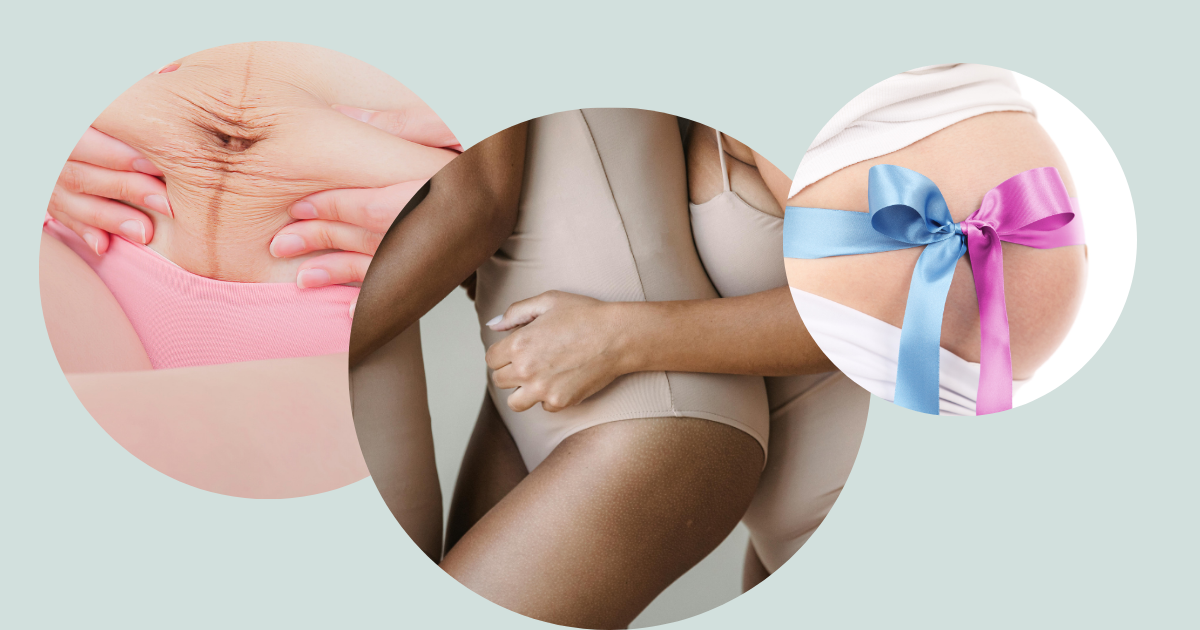
Many women experience the same after giving birth: their body seems foreign, the inner image does not follow the changes, and from the outside they feel a huge pressure to make „like before“ again. Pregnancy and childbirth change the entire – system from bones and muscles, through fascia and organs, to breath, posture and hormones. Many functions recover very well, but the body is biologically never that „null“ initial apartment before the first pregnancy. It's not a malfunction, but a new organization – body that carries your story.
what really changes in the body?
During pregnancy, the uterus grows, organs change position, the pelvis expands, the abdominal wall gives way, and the pelvic floor goes through a heavy load. If there was a caesarean section or other procedures, scars remain that change tissue tension. Images (eg magnetic resonance imaging) show that many structures repair and strengthen over time, but in some women the pelvic floor and surrounding structures change permanently –, for example through a slightly wider opening, changed tone or minor muscle damage.
In addition, more subtle changes often remain: a different shape of the abdomen, a different posture, a different way of breathing, scar sensitivity, new loads (carrying a baby, breastfeeding, lack of sleep). Your body can be strong, stable and pain-free again – but it is the body of a woman who has gone through pregnancy and childbirth, not a girl before all that.
One picture for that: your body is not a house that „broke down“, but a house that has undergone a major renovation.
Body image psychology: why we stick to „old“ body
The brain works with the inner image of the body – it's your internal map: how you look, how you fit in clothes, how you move, how you feel in your skin. This picture has been emerging for years, is relatively stable and does not change quickly. Pregnancy and childbirth, on the contrary, change the body in just a few months.
That's why many women say: „I look in the mirror and I don't recognize myself.“ This is not proof that you have a „problem with accepting“, but a natural consequence of the old inner image no longer corresponding to the new outer reality. In psychology, we know that body dissatisfaction after childbirth is often associated with sadness, anxiety, and low self-esteem. It is especially difficult when three pictures diverge:
- what the body really looks like now
- how we would like it to look
- what „we should“ look like towards society, family, media
The larger that distance, the easier the shame occurs („ne should look like this“), the withdrawal and the feeling that you are no longer „t“.
External pressure: a culture of quick return
Today's moms live in a culture of comparison. On one side are images of „quick return to form“ on social networks, magazines, environmental comments. On the other hand, reality: fatigue, not sleeping, a baby who needs you 24/7, changes in partnership, financial stress, perhaps a difficult birth experience.
Sentences like:
- „Just a little exercise and you'll be like before.“
- „Be careful not to let go.“
- „If I could, anyone can.“
they carry a clear message: your current body is not good enough and it is your duty to fix it as soon as possible. This increases guilt, encourages excessive exercise or a child at the wrong time and distances you from what you need most now – patience, rest, support and gentle, smart body care.
A message for you: the problem is not you, the problem is the expectations to which you are exposed.
A concrete example: chest, scrub and pelvic floor
If it is easier for you with concrete examples, let's take a very important system: the oshit (diaphragm), the chest and the bottom of the pelvis. During pregnancy, the uterus grows upwards and pushes the organs upwards. The eyelet rises, the lower part of the ribs expands, the chest expands to the side so that breathing can be adjusted at all.
After delivery, the uterus gradually returns, but the chest form and breathing pattern do not automatically have to completely return „to staro“. Many women keep:
- wider chest („opren“ or „sprawled“ ribs)
- shallower breathing in the upper part, less breathing in the lateral and posterior parts of the ribs
- a different connection between the blade and the bottom of the pelvis
This can affect the feeling of instability in the trunk, on the back, on the bottom of the pelvis and how you perceive your body as a whole. Even if the scale shows the same weight as before, the „system“ in which your eye, stomach and pelvic floor work – is simply different.
Why osteopathy after childbirth is a smart move
In many countries, it is quite common for women to have osteopathic support after giving birth, as it is normal for us to go for a gynecologist's check-up. It starts from the idea that pregnancy is a natural but intense condition, after which the body needs help to find a new balance.
Osteopathy looks at the entire system: pelvic floor, pelvic bones and cross, lumbar spine, thorax, scrub, abdominal wall, scars, legs and feet. In postpartum work, the aim is to
- relieve the pelvis and crossbreed
- improve mobility of ribs and thoracic spine
- support natural breathing (so that breath returns to the lateral and posterior parts of the ribs)
- gently mobilize scars (eg after caesarean section)
- help the pelvic floor and sewing work in unison again
Important: the goal is not to „restore the old body“, but to create a stable, as comfortable and well regulated as possible new a balance that suits your current role and everyday life.
Call to thought: maybe it's not the strength „endure all sama“, but wisdom and self-care to say – my body has been through a lot, it deserves support.
Invitation to a different view: after shuffling cards
After giving birth, the cards in your body are really mixed up again. The order of tension and load is different than before, even if you can't see it at first glance. In many countries, it is quite normal to look for an osteopath to „rearrange“ that new deck: to help the body navigate the new combination instead of pretending that nothing has changed.
Maybe someone has told you all your life: „You should be strong, not exaggerate, not ask for help.“ Maybe you are embarrassed to admit that it is difficult for you, that it hurts, that you do not feel good in your own skin. But if you stop and look honestly: your body has done a huge job for you. You deserve care, not just function. Osteopathy here does not mean that you are „weak“, but that you take seriously what you have been through – and want to give your body a chance to arrange itself as well as possible in a new chapter.
„I didn't do anything and I don't miss anything “ why that comment hurts and is of no use
It is quite common to hear sentences like:
„I didn't do anything special after giving birth and everything is great for me.“
„We didn't have those courses and therapies of yours before, so we're alive.“
„A little exercise and everything goes by, we didn't complain like that.“
Such sentences are not only „their experience“, but often also a hidden message: your pain is exaggeration, you are weaker, help is spoiling. Psychologically, it leaves a mark: you start doubting your own body, ignoring signals, pushing yourself across borders, being ashamed of asking for professional help.
At the same time, these words also serve those who pronounce them. They are often a way to prove to themselves that they were stronger, braver, that they „didn't need help“. Thus they justify their own decisions (that they never sought support, that they endured everything in silence) and rise above you – as if asking for help is a sign of weakness, not a sign of self-care.
It's important to know: it says more about their survival system than your real strength. Their need to be „ones that endure everything“ must not become the measure by which you evaluate your body and your value. You have the right to say: „My experience is different. My limits and my pain are real. And I choose a path where support is not a luxury or a shame, but a normal part of self-care.“
It is important to say clearly:
- Every pregnancy and every birth is different.
- Each body has its own genetics, history, injuries, stress, support or lack thereof.
- The fact that someone „is nothing radio“ does not mean that you must not – or you should not – take care of yourself.
Maybe it really was easier for that person. Maybe he doesn't remember everything. Maybe she was taught to suppress and today she does not see the connection between old pregnancies and today's ailments. Anyway, it is hers story – not your measure.
Clartext you can take with you:
- Your pain and your discomfort are real, even if others don't understand them.
- You are not weak because you ask for help; on the contrary, you take responsibility for yourself.
- The right to support after childbirth is not a luxury, but part of normal health care.
If someone welcomes you with „, I didn't need anything“, you can calmly say to yourself: „I'm glad for you –, but my body and my story are different. And I choose to take care of myself.“
Maybe nothing in your experience fits „perfectly“ into the stories you hear – and that's why you're here. Maybe your birth was difficult or easier than you expected. Maybe it hurts, maybe „self“ you feel tired, heaviness, the feeling that you no longer recognize yourself in your own reflection. You may be functioning, but inside you know that your breath, your strength, your limits are not like before. Wherever you are on that scale – none of that means you are weak, spoiled or „hypersensitive“. It just means that you have a body that has gone through a lot of experience and a psyche that is trying to understand it all. If in some sentences of this text you recognize – in resistance to your own body, in comparison with others, in the silent desire for someone to finally take you seriously –, then this space is intended for you. Not that you say „I should be more grateful“, but that for the first time you calmly admit: „This is my new self. And I deserve support to live in it more easily, with more respect for myself.“
Yours Alexandra Marjanovic
0 Comments