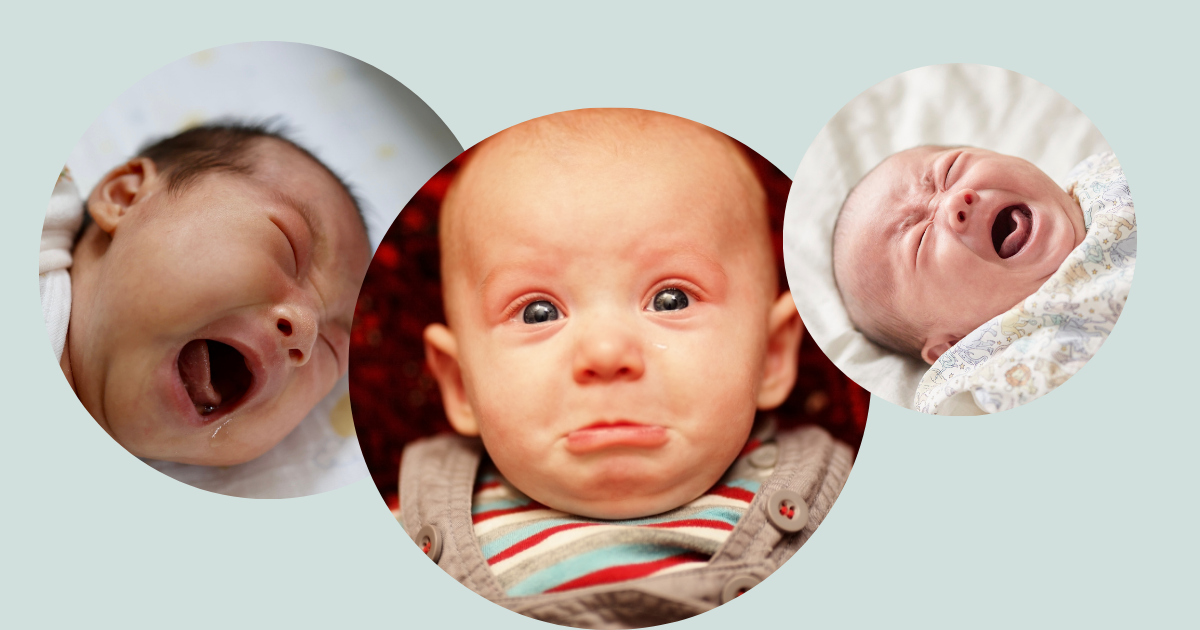
It's three in the morning.
The baby has been crying for hours, the back hurts from carrying it, the nerves are at an end. Many parents of the so-called crying babies reach this point. Exhausted. Uncertain. And with feeling: „Something is wrong with us or with our baby.“
I have been following parents and their babies in these situations for many years. This text is not only about quick anti-crying tricks, but about understanding why the baby cries excessively from the perspective of the nervous system, relationships and body and how a traumasensitive approach can help calm you down together.
What is a crying baby?
Crying is a normal way of communication for a newborn. But sometimes it seems that the baby never he doesn't stop crying. Then many parents hear the expression crying baby.
Classically, a baby is said to be tearful if it meets these three conditions:
- she cries for more than 3 hours a day
- at least 3 days a week
- for at least 3 consecutive weeks
This helps with research, but in practice it is not enough. Your baby can cry for less than 3 hours and you and your partner are completely exhausted. That is why it is more important for parents:
- can the baby even calm down
- how burdened you as parents are
- does crying dominate your day to the point where there is no more room for joy and relaxed closeness
Quarterly colic or regulation disorder?
It has long been believed that a crying baby simply has cramps and that the main problem is the stomach. Today we know that digestion can be one of the factors, but the exhausting crying of many babies cannot be explained only by cramps.
We talk more and more about regulation disorder in early childhood. It means:
- the baby's nervous system is very sensitive and immature
- light, sounds, touch and stress in the environment quickly overwhelm her
- it's hard for a baby to find its way back to calm on its own, even with your help
That is why the modern approach combines:
- physical factors (tensions, breathing, digestion, pain)
- the way the nervous system functions
- attachment relationship between baby and parent
Let him cry, he will stop“. Why that approach is problematic
Many parents hear the advice: „Let him go, let him cry, he will stop.“ Today we know that:
- repeated, long-term crying without comfort is not self-assurance training, but a big stressful situation for the baby
- the baby sends at that moment attachment signal: „I need you, I'm not sure, help me calm down“
- if no one often answers these signals, it can act as a child emotional neglect
Babies then often do not stop crying because they have learned to regulate themselves well, but because they withdraw from the inside and somehow give up. They look calmer from the outside, but stress and insecurity levels can remain high.
That's why modern, attachment-oriented care advises that the baby's cry is answered – especially in the first months of life.
Maybe one of you will feel „called “ on this topic, especially if they carry the sentence: „They let me cry too, so I turned out to be completely normal/on 😉.“ This is understandable, because hardly anyone wants to see their own story as a story with wounds or defects.
Psychologically speaking, the matter is still more complex:
- The fact that you function today, take responsibility and have achieved a lot does not automatically mean that all your early experiences were supportive and adapted to your needs. Many people develop impressive strategies to deal with early emotional overwhelm – eg constant need to be strong, perfectionism, control, belief that they must not burden others.
- Early emotional experiences shape our intellect less and our inner tone much more: how easy it is for me to ask for help, if I may have needs, how I talk to myself/myself when I'm having a hard time.
The gentle way to deal with this knowledge is not to judge our own parents, they mostly did the best they knew how, but to recognize that today we know more about attachment, stress and the nervous system. And that you can offer your child something different from what you often got: to be seen, carried and comforted and that no one is „too“ just because they cry.
Signs that your baby is difficult to regulate
With a crying baby you can notice:
- long, hard-to-break episodes of crying
- stiffness, bending backwards, „hard“ body
- difficulty sleeping, short episodes of sleep, frequent awakenings
- breast or bottle fighting (frequent grasping and release, feeding tension)
- very short moments of calm, awake state
Important: this is not proof that something is wrong with your baby, but that it needs more support for regulation – through the relationship, environment and, if necessary, therapy.
How the spiral of overload in the family occurs
When a baby cries a lot for days or weeks, it's not just nerves that are exhausted, but the whole family system:
- the baby is under high stress and has a hard time calming down
- parents are sleep deprived, worried, self-doubting
- tension grows in the parents' body, breathing becomes shallow, anxiety occurs
- the baby feels this tension and it is even more difficult to relax
This is how a circle is created in which everyone is on the edge. This is not a sign that you are a bad parent, but that the situation is objective too much for one or two people without support.
The role of pediatricians and counseling centers
Before you think about osteopathy for babies or other therapies, it is important that the pediatrician assesses:
- does the baby have signs of infection
- is he gaining enough weight
- are there signs of reflux, allergy or something else
Counseling centers for crying babies and family counseling centers:
- they help understand what is happening
- they follow crying patterns
- they provide support and structure for everyday life
- they strengthen your parenting competencies
Osteopathy for babies: what I look at in a crying baby
As an osteopath for babies and children, I see the body as a whole. With a crying baby, I am particularly interested in:
- skull and neck (eg tension after a quick, long or instrumental birth)
- chest and gash (breathing, mobility)
- abdomen and digestive system (tension, motility, gases)
- pelvis and spine (position in the uterus, load during childbirth)
- tension patterns and how they are reflected in the nervous system
In working with babies, I combine:
- many years of experience in osteopathy
- specialized education in childhood and infant osteopathy
- specialized education focused on stress regulation and early childhood development
The goal is not only to correct the „“ body, but to understand how the body and nervous system form one whole and how to help the baby find a way to calm down more easily.
What osteopathy can and cannot do
Realistically speaking, osteopathy can:
- ease tensions in the baby's body
- help make crying episodes shorter or less intense
- support digestion and sleep
- help to keep the body and nervous system less „in the alarm“
- to give you as a parent a better understanding of what is happening to the baby
Osteopathy can't:
- guarantee that the crying will disappear completely overnight
- replace a pediatrician or emergency medical care
- resolve the situation if the family is without any other support
It is one important link in the help network – gentle, but often very effective supplement to medical and psychological care.
Traumasensitive approach to parents and baby
In a crying baby, the focus is not only on the symptoms, but also on what is happening in you:
- feeling guilty („I'm not good enough/dobar“)
- anger, frustration, helplessness
- fear of self-reaction („I'm afraid of losing control“)
In a traumasensible approach:
- your emotions may be expressed – without shame or judgment
- we are not looking for „krivca“, but we understand overload patterns
- your own difficult experiences (difficult birth, losses, trauma) are also taken seriously
- we consciously build small sources of support and recovery for you
In practice, I also have room for your baby's body i for what crying with you does.
What can you do at home with a crying baby
A few practical guidelines:
- He sticks to several rituals instead of constantly changing everything (same way of putting you to sleep, similar rhythm of the day).
- Reduce stimuli: dim light, less noise, fewer visits, fewer screens in the background
- Offers proximity, but respect your limits – and you need breaks.
- Get help on time: family members, friends, professional support, counseling centers.
When it is necessary to seek emergency help
Contact a pediatrician or emergency room immediately if:
- the baby suddenly cries differently than usual (very penetrating, weak or „strange“)
- it seems unusually calm, sleepy or apathetic
- he refuses food, has a fever, vomits, has severe diarrhea or is breathing hard
Seek psychological help for yourself when:
- you no longer feel anything nice about your child
- you think you have completely failed
- you have thoughts that you could/could harm yourself or the baby
These are signals that you need support – not that you are a bad parent.
Osteopathy for crying babies: when can it help?
Osteopathy for babies makes sense if:
- the pediatrician ruled out acute illness
- crying still weighs heavily on your everyday life
- you notice tensions, asymmetries, sleep or feeding problems
- you need someone who will look at your baby as a whole with a gentle but expert touch
If you recognize yourself in this story ...
If you have recognized yourself at least a little in this text: in fatigue, self-doubt, they feel that you love your child, but everything is too much for you –, it is important to know that there is nothing wrong with you „kriv“. Your body and your heart respond to long-term stress, just like your baby's body.
In my work, two worlds meet: osteopathy for babies i understanding psychology, attachment and trauma. While I look through touch for where the baby has a hard time in his body, I also have space for your story.
If you feel that you need someone who sees both your baby and you – not only symptoms, but the whole story – I invite you to call and make an appointment. Together we can seek more peace, more breath and more security for both of you.
Vasa Alexandra Marjanovic
0 Comments